
Shaniwarwada

Blazing in the summer sun, inside the heart of Pune City stands the ruins of the majestic fort, Shaniwar Wada. Located on the banks of a dry river, this fort belongs to an important chapter in the history of the Maratha.

Amidst all the traffic and noise of modern-day Pune, the fort stands out as a living testimony of Peshwas. The construction was completed in 1745 and served as a residence to ruling Peshwas till their defeat by the British in 1818. Peshwa Bajirao laid the foundation of the fort on Saturday, January 10, 1730, and, hence, the name ‘Shaniwar Wada’ – Shaniwar meaning Saturday and Wada means ‘residence’.
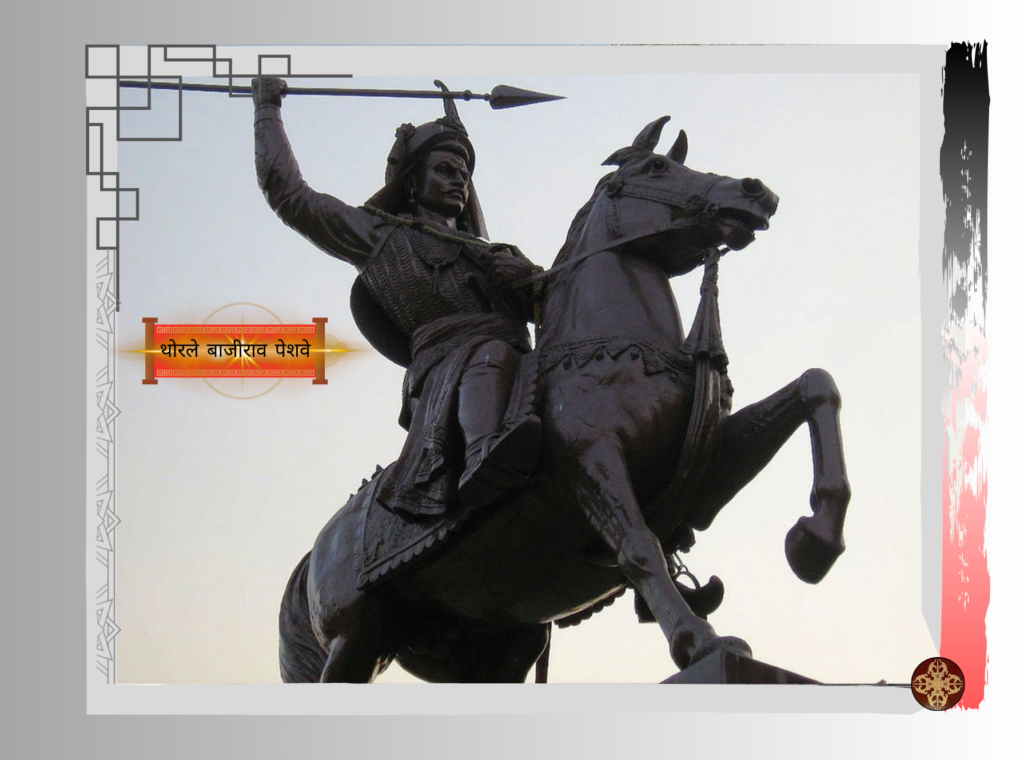
Peshwa Bajirao I, choose this place as the headquarters of the Peshwas, which was later transferred to Peshwa Balaji Bajirao, fondly referred to as Nanasaheb Peshwa.

  • As his eldest son, Vishwasrao, died during the third battle of Panipat. Madhavrao succeeded as the 4th Peshwa of the Marathas.
  • In 1772, Madhavrao’s youngest son, Narayanrao, at the age of 17, became the ruling Peshwa.

On the last day of Ganesh Chaturthi, 30th August 1773, several Gardi/ guards entered Shaniwarwada & charged towards Peshwa’s chambers. The Peshwa ran out of his chambers shouting, “Kaka Mala Vachva” (Uncle Save me”). The Gardis eventually followed Narayanrao and killed him inside his uncle’s chamber. These stories still haunts Shaniwarwada.

Similar Posts

  • Janaki Temple

    Inside Terai, in Dhanusha district of Janakpur, ancient temples & monasteries preserves deities through arts & crafts, regarded as a religious centre. The capital of Mithila has pilgrimage sites. Sita, the queen of Ram was born and raised here. Each and every square of Janakpur boosts a deity from Ramayana. The town got the name…

  • Shrines in Vietnam

    Thien Mu Pagoda Inside Central Vietnam, almost close to the imperial city of Hue, Thien Mu Pagoda is on Ha Khe Hill, it is on the left bank of the Perfume River in Huong Long Village. It is almost five km outside from the center of Hue, which means “Heavenly Lady.” Legend explains that an…

  • Shivneri

    A 17th CE. military fortification at Junnar, Pune. Shivneri was the birthplace of Chhatrapati Shivaji Maharaj. Shivneri was a region under Buddhist dominion from around 1st century AD. The caves, rock-cut architecture and water system indicate presence of human life from 1st CE. It oversees a trading path. The area was controlled under Bahmani Sultanate…

  • |

    Tea Tourism

    Tea tourism includes a vacation at a place with a view to mountains, enjoying nice retreat by a river, birding, angling & trek. Participating in tea tasting & manufacturing is a option along with old historical sites. There are activities in the frontiers at India where Tea Estates of Assam, Tripura, Meghalaya offer warm hospitality.

  • | |

    State Museum: Assam

    State Museum is at Dighalipukhuri of Guwahati. This museum was established under Assam Research Society, developed under the presidency of Kanklal Baruah. This museum has insights on Assam’s collection of rare antiques, few articles of prehistoric times features epigraphy, anthropology, sculpture, crafts, hIstory with folk art. Arms & ammunition section shows swords & armors of…

  • Shillong

    Shillong, the native soil of three hill communities Khasi, Garo and Jaintia presents a mosaic spectrum of distinct cultures which co-exist since ages. The residents of Shillong are the Khasi Tribe who are mainly Christians. Apart from Khasi, many communities such as Nepali communities also inhabit in Shillong hills. The Khasi society is matrilineal, mother is head of…