Gwalior Fort

Tomars, Mughals, Britishers & Marathas ruled Gwalior until the fort went under Scindias. The fort witnessed several battles from ancient times. Emperor Babur once denoted Gwalior Fort as the pearl amongst fortresses of India. Folklore showcases Saint Gwalipa, the patron saint of Gwalior.
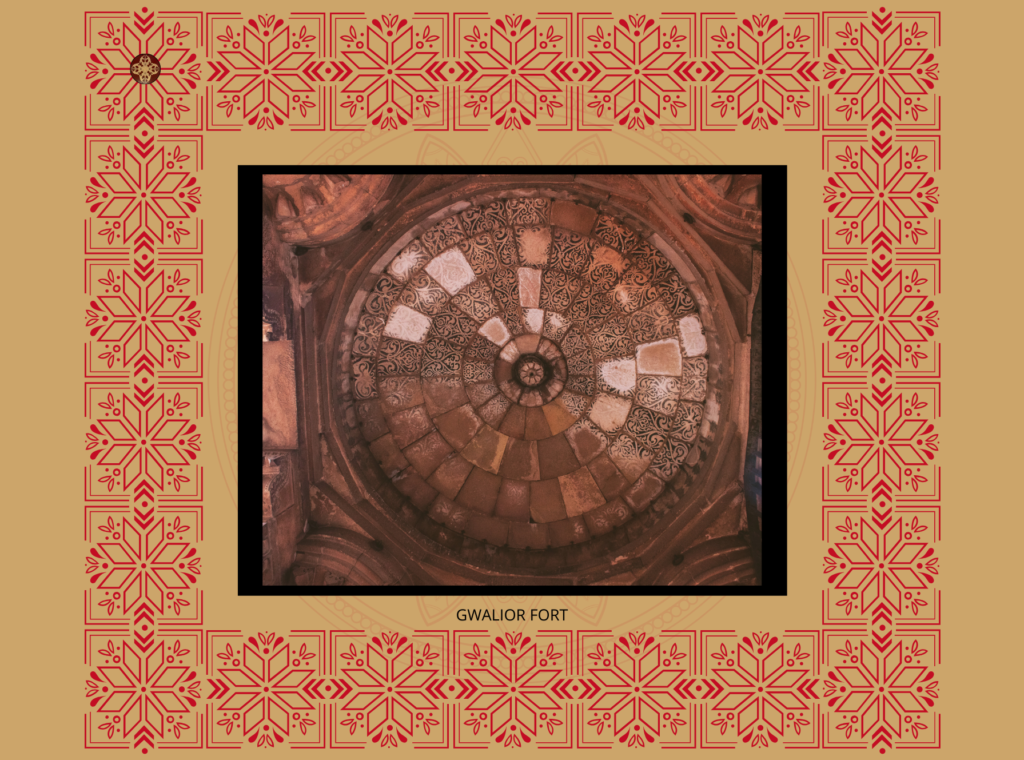
Existence of Gwalior Fort is around 10 CE, here the inscriptions depicts that it existed since 6 CE. Kachchhapaghatas captured Gwalior around this period. From 11 CE., Islamic dynasties attacked in 1196, a Ghurid General took control of the fort. Lastly, in 1232 CE, Gwalior Fort was under Iltutmish. While in AD. 1398, Tomar ruled Gwalior.

Man Singh Tomar (1486-1516 CE) ruled Gwalior. He sanctioned several structures of this fort and impressively faced attacks of Sikander Lodi on 1505 AD. On 1516 AD, Ibrahim Lodi attacked Gwalior, Man Singh Tomar died while his son held on for a year before surrendering. After the Lodis, Gwalior went under Mughal Emperor Babur. On 1558 CE., Emperor Akbar used Gwalior fort as a prison. Even an Afghani, Sher Shah also ruled Gwalior.

Similar Posts

  • Amer Fort

    Amer being an ancient fort city showcases a lot of historically significant places. Some of the known spots which can be found are – Diwan-e-Aam of Amer Fort A hall where kings would’ve attended grievances. The pillars inside the Diwan-e-Aam gives character for this hall. A point worth noticing is that Diwan-e-Aam has dual elephant…

  • |

    Tea Tourism

    Tea tourism includes a vacation at a place with a view to mountains, enjoying nice retreat by a river, birding, angling & trek. Participating in tea tasting & manufacturing is a option along with old historical sites. There are activities in the frontiers at India where Tea Estates of Assam, Tripura, Meghalaya offer warm hospitality.

  • Chanderi Fort

    The town of Chanderi is located on the lush Vindhya hills covered with forests. It presents a delightful sight via its historical wonders. Chanderi emerged in 11 CE. and rulers have managed this way, as it leads to Deccan and ports of Gujarat. The two mentioned spots of historic importance of different periods –

  • Cave in Manipur

    At 4 km away from Thalon village in Tamenglong District, at an elevation of 900 metres, Thalon caves were discovered via King Budhachandra, Maharaja of Manipur, and provide first concrete evidence of the 2000-year-old Hoabinhians in India, found in a number of Southeast Asian nations. Thalon serves as a attraction within Manipur. M/s Vajra Travel organises…

  • Lohgad

    Fort Lohagad is a wonderful fort that throws light on the rich artistry of Marathas for observation of activities in Korbaarse Maval, Andhra Maval & Nane Maval. In 1670, Bahmani kingdom lost control under Nizamshahi. Then, Shivaji took Lohgad. Now it has Laxmi Kothi for accommodation. Lohgad or “Iron Gate”, is 3400 ft high, comprising…