Shaniwarwada

Blazing in the summer sun, inside the heart of Pune City stands the ruins of the majestic fort, Shaniwar Wada. Located on the banks of a dry river, this fort belongs to an important chapter in the history of the Maratha.

Amidst Pune’s traffic and noise, the fort stands out as a living testimony of Peshwas. The construction was completed in 1745 and served as a residence to ruling Peshwas till their defeat by the British in 1818. Peshwa Bajirao laid the foundation of the fort on Saturday, January 10, 1730, &, hence, the name ‘Shaniwar Wada’ – Shaniwar meaning Saturday and Wada means ‘residence’.
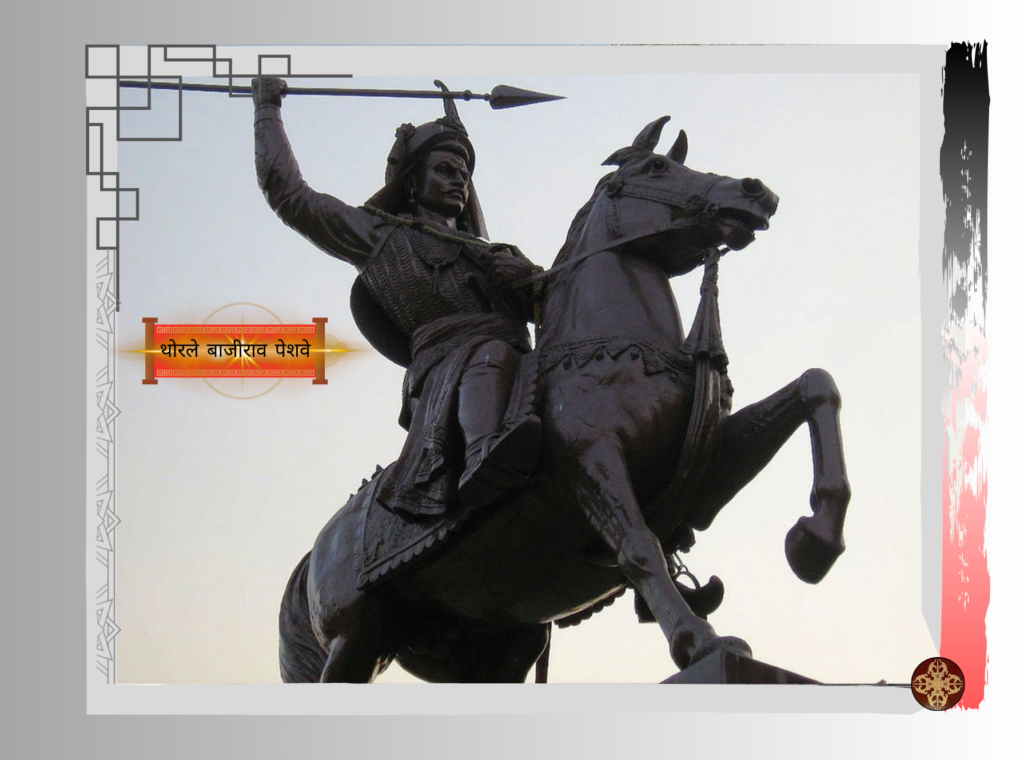
Peshwa Bajirao I, choose this place as the headquarters for Peshwas, which was later transferred to Balaji Bajirao, fondly referred to as Nanasaheb Peshwa.

  • As his eldest son, Vishwasrao, died during the third battle of Panipat. Madhavrao succeeded as the 4th Peshwa of the Marathas.
  • In 1772, Madhavrao’s youngest son, Narayanrao, at the age of 17, became the ruling Peshwa.

On the last day of Ganesh Chaturthi, on 30th August 1773, several Gardi/ guards entered Shaniwarwada & charged towards Peshwa’s chambers. The Peshwa ran out of his chambers shouting, “Kaka Mala Vachva” (Uncle Save me”). The Gardis eventually followed Narayanrao and killed him inside his uncle’s chamber. These stories still haunts Shaniwarwada.

Similar Posts

  • Shillong

    Shillong, the native soil of three hill communities Khasi, Garo and Jaintia presents a mosaic spectrum of distinct cultures which co-exist since ages. The residents of Shillong are the Khasi Tribe who are mainly Christians. Apart from Khasi, many communities such as Nepali communities also inhabit in Shillong hills. The Khasi society is matrilineal, mother is head of…

  • |

    Offbeat Assam

    Cultural diversity and lifestyle of Naga tribes are unique. They have held on to their past & maintained grip on to their unique lifestyle & traditions, which exist in remote areas even to this day. A glass of Rice Wine on the tri-border region of Nagaland, Manipur & Assam. Remote Naga Settlement of Hejalio. Hangrum…

  • Shrines in Vietnam

    Thien Mu Pagoda Inside Central Vietnam, almost close to the imperial city of Hue, Thien Mu Pagoda is on Ha Khe Hill, it is on the left bank of the Perfume River in Huong Long Village. It is almost five km outside from the center of Hue, which means “Heavenly Lady.” Legend explains that an…

  • Raigad

    A hill fort on Mahad, Raigad district of Maharashtra, was once a capital of Chhatrapati Shivaji Maharaj in 1674, after being coronated as the King of Maratha Empire, “Swarajya” which later developed in an Empire, eventually controlling much of western and central India. Raigad is more than 2,306 ft. in Sahyadri ranges, 1737 steps which…

  • Pratapgad

    Pratapgad is at 15 km from Poladpur and 14 miles west of- Mahabaleshwar, a well-known hill station. The fort is at 3,540 ft, built on a spur that overlooks the road in between the villages of Par and Kinesvar. Raje Shivaji commissioned Moropant Trimbak Pingle as his prime minister, who undertook the construction to defend….

  • |

    Langpangkong

    In Langpangkong range, inside the valleys of Dikhu and Tzula Rivers, a series of caves create attractions for explorer or anthropologists alike, believed as a shelter taken by an Ahom King. Langpangkong is one of the well visited and a famous attraction of Nagaland. Within Tuli and Changtongya of Mokokchung of Nagaland, Langpangkong offers a great escape. Attraction At Mokokchung…