Shaniwarwada

Blazing in the summer sun, inside the heart of Pune City stands the ruins of the majestic fort, Shaniwar Wada. Located on the banks of a dry river, this fort belongs to an important chapter in the history of the Maratha.

Amidst Pune’s traffic and noise, the fort stands out as a living testimony of Peshwas. The construction was completed in 1745 and served as a residence to ruling Peshwas till their defeat by the British in 1818. Peshwa Bajirao laid the foundation of the fort on Saturday, January 10, 1730, &, hence, the name ‘Shaniwar Wada’ – Shaniwar meaning Saturday and Wada means ‘residence’.
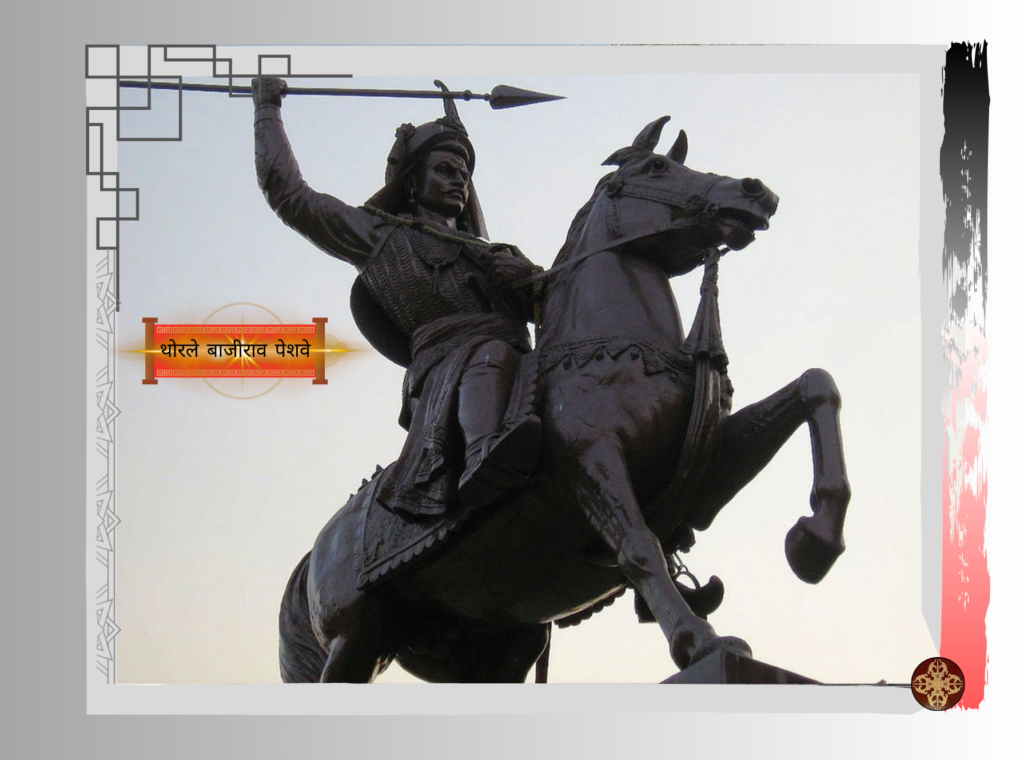
Peshwa Bajirao I, choose this place as the headquarters for Peshwas, which was later transferred to Balaji Bajirao, fondly referred to as Nanasaheb Peshwa.

  • As his eldest son, Vishwasrao, died during the third battle of Panipat. Madhavrao succeeded as the 4th Peshwa of the Marathas.
  • In 1772, Madhavrao’s youngest son, Narayanrao, at the age of 17, became the ruling Peshwa.

On the last day of Ganesh Chaturthi, on 30th August 1773, several Gardi/ guards entered Shaniwarwada & charged towards Peshwa’s chambers. The Peshwa ran out of his chambers shouting, “Kaka Mala Vachva” (Uncle Save me”). The Gardis eventually followed Narayanrao and killed him inside his uncle’s chamber. These stories still haunts Shaniwarwada.

Similar Posts

  • Bali

    At west of Java in Lesser Sunda Islands, Bali is world renowned for scenic rice terraces, fragrant cuisine, stunning culture & tradition. With elaborate temples, endless coastline, best coral reefs, retreat and waterfalls, Bali combines leisure & adventure impeccably. A combination of spiritual gateway & hard-partying all into one. The island boasts sparkling sunrises & sunsets, enough for enticing…

  • Kumbhalgarh

    On the Aravalli ranges, in Rajsamand of Rajasthan, around 82 km northwest of Udaipur at 3600 ft., Kumbhalgarh Fort extends 36 km long. The walls of Kumbhalgarh are around 15 ft. thick with 7 fortified gateways. There are 300 Jain temples & 60 Hindu temples located within Kumbhalgarh Fort. Kumbhalgarh Fort was considered a significant…

  • Gwalior Fort

    Tomars, Mughals, Britishers & Marathas ruled Gwalior until the fort went under Scindias. The fort witnessed several battles from ancient times. Emperor Babur once denoted Gwalior Fort as the pearl amongst fortresses of India. Folklore showcases Saint Gwalipa, the patron saint of Gwalior. Existence of Gwalior Fort is around 10 CE, here the inscriptions depicts that it…

  • Raigad

    A hill fort on Mahad, Raigad district of Maharashtra, was once a capital of Chhatrapati Shivaji Maharaj in 1674, after being coronated as the King of Maratha Empire, “Swarajya” which later developed in an Empire, eventually controlling much of western and central India. Raigad is more than 2,306 ft. in Sahyadri ranges, 1737 steps which…

  • Daulatabad

    House of wealth was the name given by Muhammad-bin-Tughluq in 1327, to Daulatabad in Deccan in Indian subcontinent. The ancient name being Devagiri or Deogiri, meaning Hill of Gods was under Yadavas who ruled under Chalukyas in Nasik. Bhillama V, a Yadav ruler had many campaigns against the Hoysalas, Paramaras & Chalukyas. They founded Deogiri…

  • Vietnamese Pagoda

    Yen Tu Pagoda Zen atmosphere of Yen Tu is at the Yen Tu mountain peak, overlooking forests of Hanoi and Halong Bay, 110 km of capital. A 280,000 VND ticket is a way for exploring this pagoda. Exploring Yen Tu A best way is Dong Trieu-Cam Pha bus – Uong Bi. To get there, get…