Sindhudurg

Samudra Gaman or sea voyage was banned in scriptures, construction in an island represents revolutionary mindset of Marathas. Hiroji Indalkar Deshmukh architect constructed Sindhudurg, several forts got maintained through Chatrapati., Sindhudurg as well as Raigad were one of the elegant forts, completed within 1664. Raje Shivaji selected a strategic island to counter foreigners, & to keep Siddis of Murud-Janjira within limits.
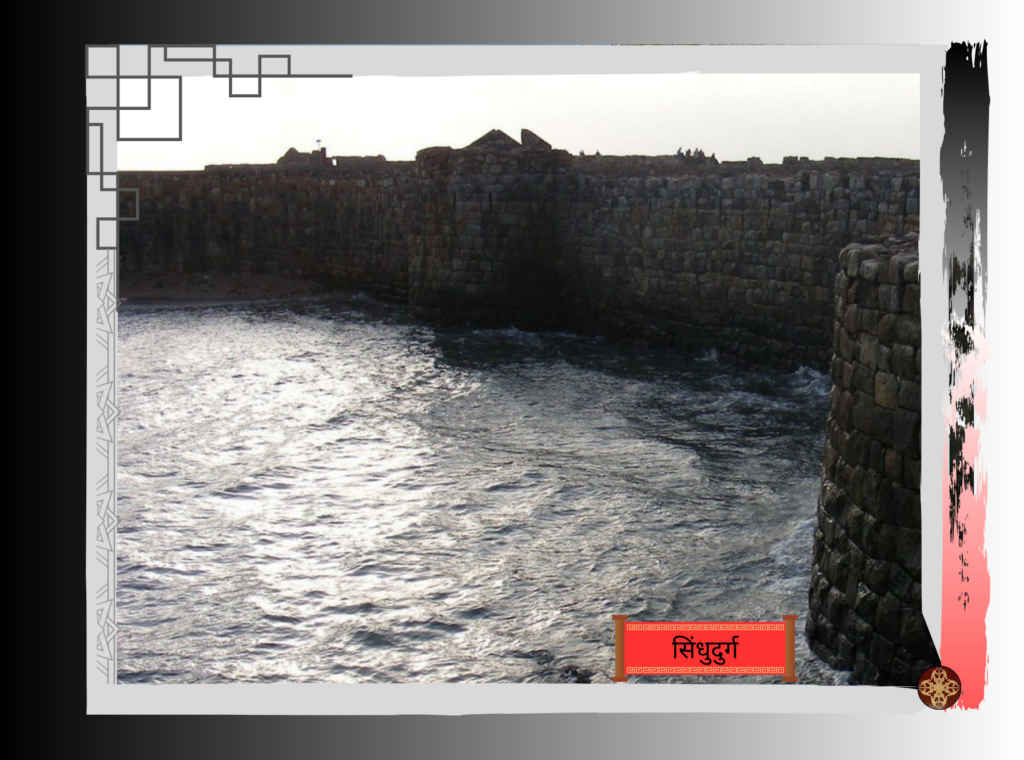
Sindhudurg Fort is preserved and has a zigzag rampart with several defensive bastions. Apart from the huge stones, the building material involved 2000 khandis – 72,576 kilogram of iron erects a massive walls. Foundations in सिंधुदुर्ग got firmly made with 5 khandis or 181.5 Kg molten lead.

Creation of Sindhudurg

Molten and casted , over 4031 mounds of elements got laid on Sindhudurg’s foundation. Construction was completed over a period of 3 years from 1664 to 1667. Fort is spread over 48 acres (190,000 m²) 2 mile (3 km) long fort rampart, the fort walls have 9.1 m high & 13 ft (3.7 m) wide. Here walls serve as a deterrent to approaching enemies & waves from nearby shores.

  • The main entrance is concealed in such a way that no one can pinpoint it from outside

Residents of Sindhudurg-

  • Permanent residents staying at Sindhudurg has been declined, it was abandoned as it has inadequate opportunities. Over 15 families have perhaps remained. The original killedars still resides in one of the 16 houses in the fort
Findings of Sindhudurg (Underwater)
  • Dr. Sarang Kulkarni’s underwater discoveries have led to the establishment of scuba industry. Sindhudurg is the destination in arabian sea for foreign as well as Indians. Tourist can get an island tour, snorkeling as well as diving in reefs.

Similar Posts

  • Wonders of Tripura

    A cultural amalgamation among 7 sister states, this destination culminates in itself a hoard of treasures like the historical sites, temples going back hundreds of years, wildlife and a thriving crafts industry. With an extensive spread of diversity in flora and fauna, this makes for one of the most exciting curious destination in eastern India….

  • |

    Langpangkong

    In Langpangkong range, inside the valleys of Dikhu and Tzula Rivers, a series of caves create attractions for explorer or anthropologists alike, believed as a shelter taken by an Ahom King. Langpangkong is one of the well visited and a famous attraction of Nagaland. Within Tuli and Changtongya of Mokokchung of Nagaland, Langpangkong offers a great escape. Attraction At Mokokchung…

  • Monasteries in Arunachal

    Tawang Monastery A sacred monastery known as Tawang Ganden Mangyal Lhatse or ‘the celestial paradise of the divine site chosen by a horse’. The monastery is a old 400 years religious institution with 17 Gompas which was build amidst the ranges with nice views of Tawang-Chu valley. It houses around or more than 300 monks…

  • Gwalior Fort

    Tomars, Mughals, Britishers & Marathas ruled Gwalior until the fort went under Scindias. The fort witnessed several battles from ancient times. Emperor Babur once denoted Gwalior Fort as the pearl amongst fortresses of India. Folklore showcases Saint Gwalipa, the patron saint of Gwalior. Existence of Gwalior Fort is around 10 CE, here the inscriptions depicts that it…

  • Chanderi Fort

    The town of Chanderi is located on the lush Vindhya hills covered with forests. It presents a delightful sight via its historical wonders. Chanderi emerged in 11 CE. and rulers have managed this way, as it leads to Deccan and ports of Gujarat. The two mentioned spots of historic importance of different periods –

  • Lohgad

    Fort Lohagad is a wonderful fort that throws light on the rich artistry of Marathas for observation of activities in Korbaarse Maval, Andhra Maval & Nane Maval. In 1670, Bahmani kingdom lost control under Nizamshahi. Then, Shivaji took Lohgad. Now it has Laxmi Kothi for accommodation. Lohgad or “Iron Gate”, is 3400 ft high, comprising…