Lohgad

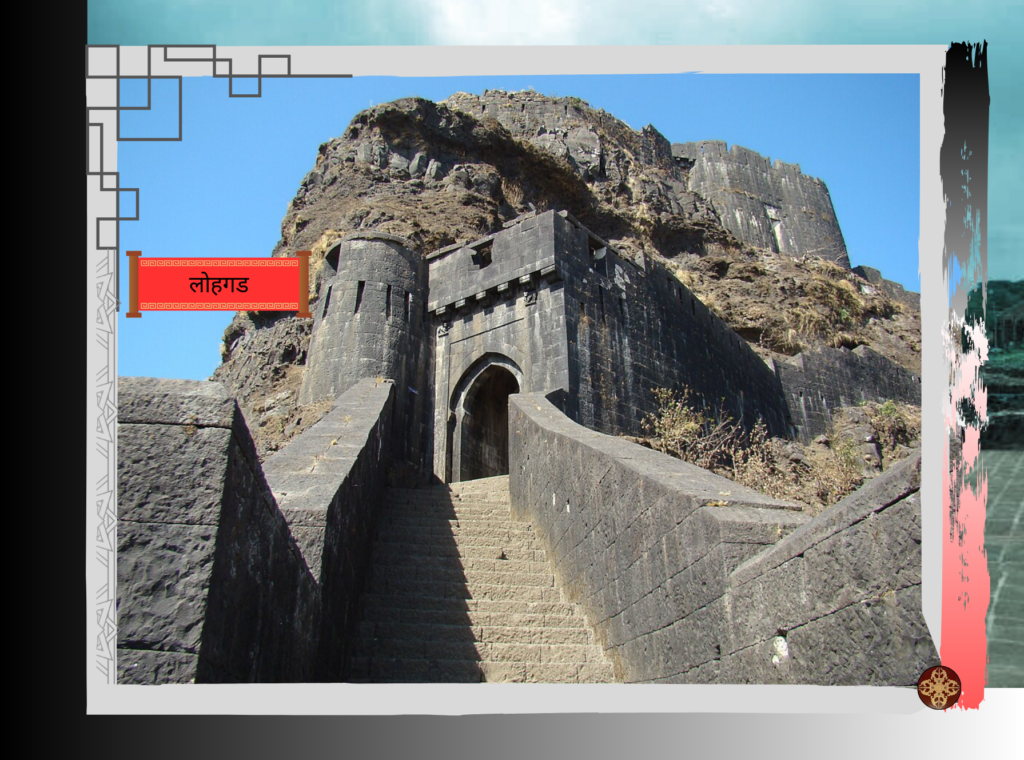
Fort Lohagad is a wonderful fort that throws light on the rich artistry of Marathas for observation of activities in Korbaarse Maval, Andhra Maval & Nane Maval. In 1670, Bahmani kingdom lost control under Nizamshahi. Then, Shivaji took Lohgad. Now it has Laxmi Kothi for accommodation. Lohgad or “Iron Gate”, is 3400 ft high, comprising balconies. Main gate of this centuries old gem is known as Delhi gate. The 3rd gate within Lohgad has access to the guard’s office.
Lohagad makes nice choices for trekkers from around Pune City, because of its ease of accessibility with surroundings. A lake surrounds this fort.

Narayan Darwaaja, Hanuman Darwaaja, Ganesh Darwaaja & Maha Darwaaja are gates of Lohagad. Hanuman Darwaaja is the oldest one. There is a big cave outside this fort that was a store space for grains.

Within the complex, a temple for Shivlinga, 2 tanks, a tomb inside can be seen inside Lohgad. A Peculiar Vinchukata or scorpion tail decorated the walls inside this fort.

Pune has the nearest Airport & railway station from Lohagad. Further travel may be choosen via road. From Pune one can opt for train operating between Pune – Lonavala – Malawali. From Malawali  Railway Station, the fort is around 9 km away.

Similar Posts

  • |

    Festival of Nyokum

    Yugang – Main prayer structure of the Nyishi is made of bamboo, known as Yugang where sacrifice is tethered. Often one finds small chickens hung in Yugang. In Nyokum, priests specify a number or kind of animals for sacrificial activities. Nyubh are priests of Nyishi, they have no idol in this form of worship. Beside…

  • Gwalior Fort

    Tomars, Mughals, Britishers & Marathas ruled Gwalior until the fort went under Scindias. The fort witnessed several battles from ancient times. Emperor Babur once denoted Gwalior Fort as the pearl amongst fortresses of India. Folklore showcases Saint Gwalipa, the patron saint of Gwalior. Existence of Gwalior Fort is around 10 CE, here the inscriptions depicts that it…

  • |

    Offbeat Assam

    Cultural diversity and lifestyle of Naga tribes are unique. They have held on to their past & maintained grip on to their unique lifestyle & traditions, which exist in remote areas even to this day. A glass of Rice Wine on the tri-border region of Nagaland, Manipur & Assam. Remote Naga Settlement of Hejalio. Hangrum…

  • | |

    Inside Assam

    Kaziranga Elephant Festival Celebrated for awareness about the conservation of Asiatic elephants. The Forest Department of Assam, with Department of Tourism, arranges this festival as a measure to control man-animal conflict. In this festival, elephants are decked for participating in events. Folk dances, parade & football competition also happens. It occurs at February for advocating…

  • |

    Naga – Zeme

    Hazaichak and Laisong, the remote villages in scenic southern Assam are inhabited by Zeme Nagas. Hangseuki are the traditional dormitories of Zeme Naga boys. The objective of these dorms is to inculcate the Zeme culture. A number of festivals are celebrated within Naga community. State boundaries do not make much difference for the culturally vibrant…

  • Ujjayanta Palace

    Ujjayanta Palace, standing at the heart of Tripura, is a famous royal house that boasts tiled-floors, well crafted doors & curved wooden ceilings that showcases the rare skills. The state museum of Tripura is well known for its display of ethnic lifestyle, cultural artefacts & utility crafts of communities residing in and around Tripura. This…